Air India Flight 171 crashed shortly after takeoff, killing all but one onboard and many people on the ground outside the airport perimeter. It is now widely understood that a preliminary report, based on information gleaned from the recovered voice and data recorders, and from simulations to test out certain scenarios, that the two fuel switches (for left and right engines) in the cockpit were turned off, shutting down the engines and deploying the RAT.
Observers say that the RAT (Ram Air Turbine, which provides emergency auxiliary power) deployed only seconds after the aircraft lifted off from the runway. The RAT deployed between 4 and 5 seconds after the aircraft cleared the runway. It would have taken another 5 seconds or more for the RAT to generate electricity. We don’t know if the cockpit went blank from lack of power in this 10 to 15 second interval. The aircraft has lithium batteries (a source of trouble in the past): but in an electrical failure you don’t know if power from the batteries would have been available.
The Boeing 787 Dreamliner uses two main lithium-ion batteries: a main battery located in the forward electronics bay and an auxiliary power unit (APU) battery in the aft electronics bay. These batteries serve several critical functions, including starting the engines or APU, providing backup power for critical systems, and supporting ground operations.’
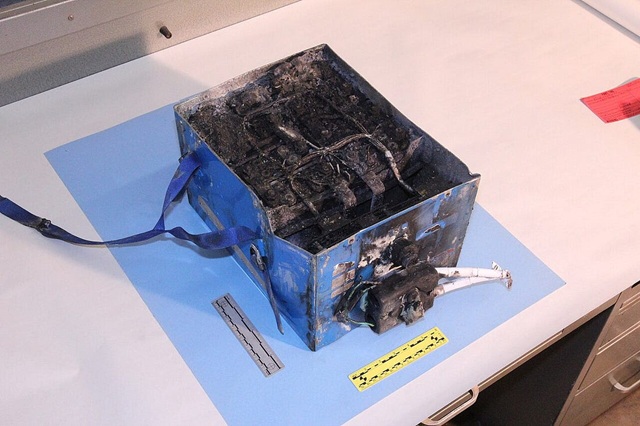
The voice conversations in the cockpit have not been released either in original form or transcribed. Whether they will be is unknown.
Some suggest that switching off the fuel for both engines could have been a suicide by pilot (or copilot). No information about the personal circumstances of either pilot has been made public, if in fact such information exists. There are no news reports that either pilot was having personal problems (a topic that was considered in the crash of EgyptAir 990 in 1999, Germanwings Flight 9525 in 2015 and Malaysian Airline flight MU-370 in 2017).
There are procedures to turn the fuel switches off and back on in case of a dual engine failure. That would have happened if there was some sort of engine emergency and a response by the pilots to flip the switches back and forth. Such a procedure would have been called out and heard on the voice recorder. We will have to wait to see what the investigators say on that score (if anything).
We don’t know if there was any cockpit conversation about the fuel switches. If either the pilot or copilot shut them off, the other could switch them back on. Apparently that never happened.
There is an issue with timing. If the RAT deployed so quickly, indicating an electrical and hydraulic failure, the pilots may have tried to use the fuel switches as an emergency procedure to get the engines going again, a little like resetting a circuit breaker in a home or office power bloc. If that scenario is the right one, then they had time to turn the switches off, but it was too late to turn them back on as the plane crashed.
If this scenario is right, then the switches are not the cause of the crash, but the consequence of a massive electrical/hydraulic failure that killed the engines.
Here the timeline is critical.
The main point is that the fuel switches may have been a consequence of electrical failures and not the cause of the crash, although the investigation allegedly points in the opposite direction. From what we currently know, the preliminary report does not reach any conclusion on the cause of the crash.
In my earlier article I stated that the most likely cause was a massive electrical and hydraulic failure. That scenario still makes the most sense, given the time lines that we know so far.