In a rare and highly consequential diplomatic moment, Israel and Lebanon held their first official talks since 1993 in Washington on Tuesday, under U.S. auspices. The meeting, convened by U.S. Secretary of State Marco Rubio, brought together senior representatives from both countries as fighting between Israel and Lebanese Hezbollah continued to escalate on the ground. While framed as an attempt to reduce tensions and explore pathways toward stability, the talks underscored deeper structural divisions in the region and highlighted the persistent absence of Hezbollah and Iran from formal diplomatic engagement. According to analysis by The Soufan Center, the negotiations further isolated Hezbollah politically while exposing the limits of diplomacy in the face of ongoing military escalation.
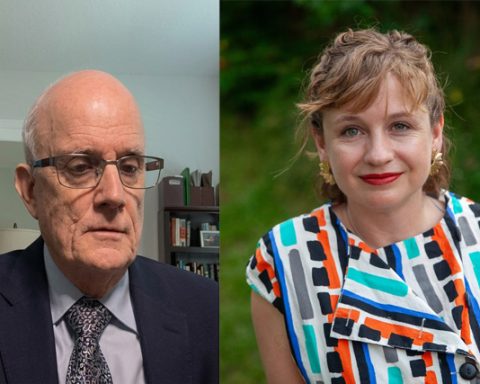
The meeting included Israel’s Ambassador to the United States Yechiel Leiter and Lebanon’s representative Nada Hamadeh Moawad, alongside U.S. officials including Ambassador to the United Nations Michael Waltz and U.S. Ambassador to Lebanon Michel Issa. The presence of Waltz signaled Washington’s continued reliance on UN Security Council frameworks, particularly Resolution 1701, which ended the 2006 Israel-Hezbollah war. Although the discussions were moderated by senior U.S. State Department officials, they did not produce a formal agreement or ceasefire framework. Instead, they reflected competing priorities among stakeholders and reinforced the fragility of diplomatic coordination in a conflict zone still defined by active hostilities.
Despite the lack of tangible breakthroughs, both sides agreed to continue direct dialogue and to pursue discussions on demarcating their land border, an unresolved issue that has long fueled friction between the two states. The talks followed a U.S.-brokered maritime boundary agreement signed in 2022, which had opened the door to offshore energy exploration. However, optimism over economic cooperation has been overshadowed by renewed violence. The absence of Hezbollah and Iran from the Washington meeting was particularly significant, as both actors remain central to the conflict dynamics. As The Soufan Center has observed, their exclusion appeared to be a deliberate effort to reshape the diplomatic playing field by isolating Hezbollah’s influence within Lebanon and across the region.
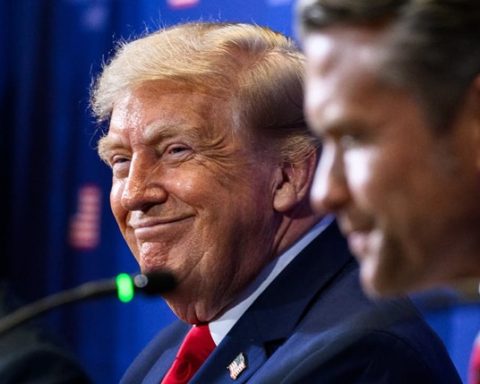
The United States and Israel used the platform to reiterate longstanding demands for Hezbollah’s disarmament. Secretary Rubio made clear that Washington views demobilization of the group as a prerequisite for any broader regional strategy involving Israel, Arab states, and the United States. In his remarks, Rubio framed Hezbollah not only as a military threat to Israel but also as a destabilizing force for Lebanon itself, stating that Lebanese civilians have borne the consequences of its armed activities. Israeli officials echoed this position, with Ambassador Leiter suggesting that the Lebanese government had signaled dissatisfaction with Hezbollah’s presence and influence. From this perspective, the talks were not merely about border disputes or ceasefire arrangements, but about restructuring the regional security order.
For Lebanon, however, the immediate priority was halting the escalating violence. President Joseph Aoun expressed hope that the talks would mark “the beginning of the end of suffering,” particularly for communities in southern Lebanon that have been most affected by the conflict. Since Hezbollah entered the confrontation in support of Iran, the humanitarian toll has sharply increased, with widespread displacement and significant civilian casualties. Yet despite Beirut’s push for de-escalation, Israel refused to commit to a truce during the Washington meeting, maintaining that military pressure on Hezbollah must continue until security guarantees are achieved.
Hezbollah, meanwhile, sought to delegitimize the talks entirely. Its leadership accused the Lebanese government of aligning with U.S. and Israeli interests at the expense of national sovereignty. Prior to the meeting, Hezbollah Secretary General Naim Qassem called for Beirut to withdraw from participation, arguing that disarmament discussions were unacceptable while Israeli military operations continued. He outlined conditions for any future consideration of demobilization, including a full Israeli withdrawal from contested territories and an end to what Hezbollah describes as occupation policies in the region. The group’s position reflects its broader ideological framing as a “resistance” movement, a narrative strongly supported by Iran.
Tensions surrounding the talks also spilled into domestic Lebanese politics. Hezbollah mobilized supporters in Beirut’s southern suburbs to protest the government’s engagement with Washington-led diplomacy, raising concerns about potential internal unrest. Analysts have warned that such polarization risks deepening Lebanon’s already fragile political system. The Soufan Center notes that the growing divide between state institutions and Hezbollah-backed constituencies could increase the likelihood of domestic instability, particularly if military pressure on the group continues alongside diplomatic exclusion.
Iran’s reaction further complicated the regional picture. Tehran reaffirmed its support for Hezbollah, viewing the group as a critical component of its deterrence strategy against Israel and the United States. Iranian officials signaled that weakening Hezbollah would undermine what they describe as the “Axis of Resistance.” At one point, Iranian parliamentary leadership even suggested that broader Iran-U.S. negotiations could be affected if Lebanon-related hostilities escalated further, highlighting how interconnected these conflicts have become.
On the ground, the absence of diplomatic breakthroughs was reflected in continued violence. Israeli forces reported encircling strategic areas in southern Lebanon, while airstrikes targeted Hezbollah positions in multiple locations. Lebanese authorities reported civilian casualties and infrastructure damage, with additional rocket fire launched by Hezbollah in response. The United States issued a statement affirming Israel’s right to self-defense but did not call for an immediate cessation of hostilities, underscoring Washington’s complex balancing act between diplomatic engagement and strategic alignment.
Beyond immediate military developments, Israel has also signaled plans to expand a buffer zone deeper into Lebanese territory, a move that would prevent the return of displaced civilians and likely intensify tensions further. Such proposals reinforce Hezbollah’s argument that the Lebanese state is incapable of defending its sovereignty, a message that continues to resonate among segments of its support base.
Ultimately, the Washington talks exposed both the possibilities and limitations of current diplomacy. While they reopened a channel of direct communication between Israel and Lebanon, they also highlighted the exclusion of key actors whose participation may be essential for any durable settlement. As The Soufan Center assessment suggests, the meeting may have succeeded in isolating Hezbollah diplomatically in the short term, but it has not yet altered the underlying realities driving the conflict, leaving the region suspended between tentative dialogue and sustained confrontation.