Human history over the last several centuries has been marred by wars and conflicts, in which millions of innocent people have lost their lives. A careful study of such events would highlight the fact that these wars have been instigated and carried out by warmongers—leaders who would not hesitate to start a war due to territorial ambitions, the desire to spread their religion, greed for domination, or vengeful hatred towards others.
A notable example of such a warmonger was Hitler, who initiated the Second World War out of a desire to become the dominant global leader and to see Germany overpower other nations. Numerous other examples can be readily cited, both from history and from the present day.
Clearly, warmongers are short-sighted individuals lacking a holistic view of human life and the deeper forces that shape human destiny. They place great faith in violent means to achieve their objectives and care little for the suffering caused in the process. By any stretch of the imagination, such individuals cannot be considered civilised or as possessing any meaningful moral value system.
In any war between two nations, there is invariably one party that initiates the conflict for whatever reason, and can be deemed the primary warmonger. In the case of the ongoing Russia–Ukraine war, it is well known that the war was initiated by Russian President Vladimir Putin. Similarly, in the current war between Israel and Hamas, it is known that Hamas launched the initial attack. Once warmongers start a conflict—eschewing peaceful initiatives to resolve disputes—the opposing parties are often left with no choice but to fight in defence of their interests. As the wars progress, all sides seem to prioritise military victory over the value of human life and the immense suffering inflicted on innocent people.
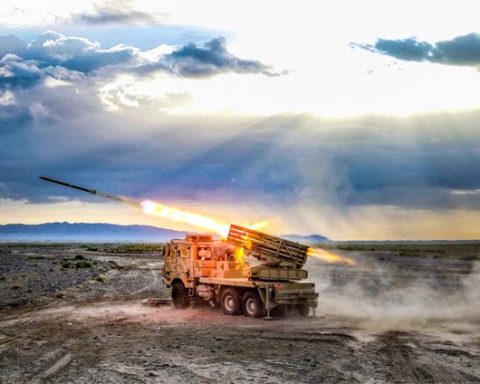
As both the Ukraine–Russia and Israel–Hamas wars continue with no clear end in sight, millions of innocent civilians and soldiers have perished due to indiscriminate bombing and relentless military attacks. The vast majority of those who have died or been injured had no role in deciding to go to war. They are the true victims—people who simply wished to lead peaceful, normal lives.
As the conflicts persist, a critical question arises: who is responsible for the continuation of these wars? Is it the Russian President or the Ukrainian President? At present, both appear to be more focused on military strategies than on exploring opportunities for peace. The same can be said of the leaders of Israel and Hamas.
Both parties in each conflict seem determined to achieve victory at any cost. Even when peace initiatives arise, the primary motivation often seems to be driven by self-serving considerations rather than genuine concern for the loss of innocent lives.
A careful analysis of historical events reveals that wars rarely solve the root issues and more often lead to prolonged suffering and further conflict.
In some cases, it may appear that a warmonger has succeeded in achieving his objective. For instance, China’s aggressive annexation of peaceful Tibet several decades ago, which involved the killing of many innocent Tibetan protesters, may seem like a successful exercise of territorial ambition. Today, China maintains a vice-like grip over Tibet. While it may appear that China has had the “last laugh”, it is in fact sitting on a time bomb. The Tibetan people’s desire for freedom remains alive, and the movement could gather strength at any moment. China is aware of this, which is why it enforces strict control over the region and frequently restricts foreign entry into Tibet.
Despite the tremendous technological, scientific, and material progress achieved in recent decades, it is clear that the mindset of those who place their faith in war and conflict as tools to fulfil their desires and ambitions has not evolved.
In light of the current global conflicts, discerning thinkers are beginning to question whether the world will ever be able to rid itself of warmongers.