Two retired senior Mossad agents have revealed unprecedented details about a covert Israeli operation targeting Hezbollah’s communication networks through booby-trapped walkie-talkies and pagers. The operation, reported by Haaretz, represents one of the most sophisticated psychological warfare campaigns in modern counterintelligence history, crippling the Lebanese militant group and disrupting Iranian influence in the region.
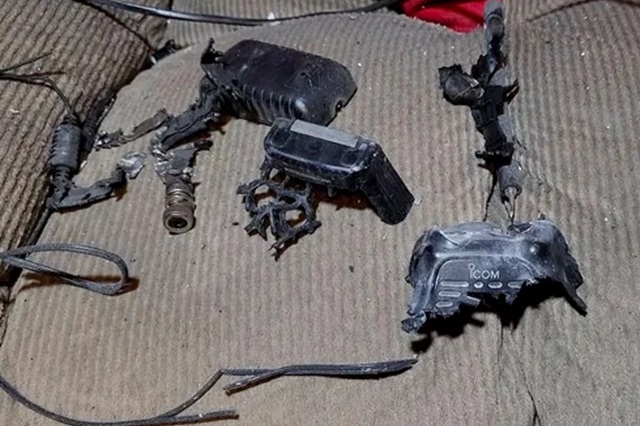
The operation began over a decade ago with weaponized walkie-talkies disguised as ordinary communication devices. According to one Mossad officer, codenamed Michael, Israeli agents manufactured 16,000 walkie-talkies embedded with explosive batteries. These devices were covertly funneled to Hezbollah operatives through a network of shell companies and unsuspecting foreign suppliers.
“They didn’t know they were buying it from Israel,” Michael told Haaretz. “We are a global production company. We write the screenplay, we are the directors, the producers, the main actors. The world is our stage.”
Recognizing that the walkie-talkies were used only during active conflict, Mossad shifted focus to pagers, devices carried by Hezbollah operatives at all times. These seemingly ordinary pagers contained small, concealed explosive charges. Mossad agents ensured their distribution by partnering with a Taiwanese manufacturer, Gold Apollo, and leveraging a Hungarian shell company to create a fake supply chain.
The pagers were designed to minimize collateral damage while maximizing psychological impact. Heavier and slightly larger than standard pagers, they activated upon receiving a fake “encrypted message” or when certain buttons were pressed. According to Haaretz, this strategy ensured that Hezbollah operatives became increasingly paranoid about their equipment.
One agent, codenamed Gabriel, explained: “This is a very stupid device by nature. That’s why we used it. It’s only receiving messages with several grams of explosives, just enough to send a message—literally and figuratively.”
The operation culminated on September 17, 2024, when 5,000 rigged pagers detonated, wounding numerous Hezbollah operatives. Reports suggest even members of Hezbollah leader Hassan Nasrallah’s inner circle were affected.
The psychological toll on Hezbollah was immense. “After the pagers exploded, people were afraid to turn on the air conditioners in Lebanon because they thought they might explode,” one retired agent told Haaretz. The widespread fear paralyzed the group, leaving its leadership disorganized and its fighters demoralized.
Rather than killing targets outright, Mossad aimed to leave operatives wounded, forcing Hezbollah to allocate resources for medical care while serving as a constant reminder of Israel’s reach. “Their wounds were a walking reminder not to mess with us,” an agent noted.
The impact of the operation extended beyond Hezbollah. By weakening the group’s infrastructure and morale, Mossad indirectly undermined Iranian influence in Lebanon and contributed to the destabilization of the Assad regime in Syria. According to Haaretz, the success of the “pager plot” also bolstered Israeli efforts against Hamas and other adversaries, leaving Hezbollah isolated and desperate for a cease-fire.
“This operation, combined with IDF attacks, left Hezbollah in a very difficult situation—no chain of command, no morale among their soldiers,” one agent remarked. “They were asking and begging for a cease-fire.”
The operation highlights Mossad’s ability to leverage deception, advanced technology, and psychological warfare to achieve far-reaching strategic goals. As one agent summed up, “We’ve already moved on to the next thing, and they’ll have to keep guessing what that is.”