China’s air force is emerging as an increasingly influential force within the People’s Liberation Army as sweeping anti-corruption investigations weaken the standing of senior officers from other branches, reshaping the balance of power inside the military.
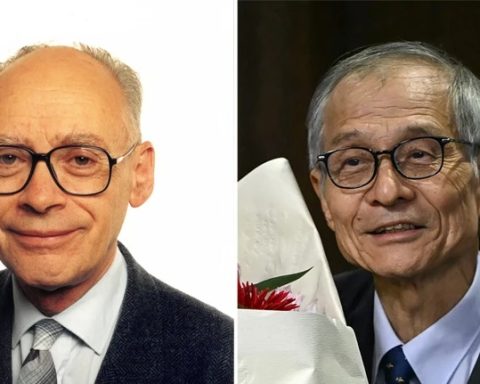
The shift was underscored on Monday when the PLA held a ceremony promoting Yang Zhibin and Han Shengyan to the rank of air force general, with President Xi Jinping personally presenting the orders. According to state-run Xinhua News Agency, Yang serves as commander of the Eastern Theater Command, which oversees Taiwan and the East China Sea, while Han leads the Central Theater Command, responsible for the defense of Beijing.
Yang’s appointment follows the downfall of his predecessor, Lin Xiangyang, an army officer who was expelled from the Communist Party in October over corruption allegations. Lin was among several senior military figures removed under Xi’s anti-graft campaign, which has disproportionately affected the army, navy and Rocket Force.
The air force’s growing prominence has also been evident at major political and military gatherings. At this month’s Central Economic Work Conference, four senior military officials were absent, and three of the officers who filled those roles in an acting capacity came from the air force. They represented key posts within the Central Military Commission, including the Political Work Department, the Logistics Support Department and the Training and Administration Department.
A similar pattern appeared at the Communist Party’s fourth plenum in October. Of China’s four military branches and the People’s Armed Police Force, only the air force had both its commander and political commissar in attendance. Representatives from the navy, Rocket Force and armed police were absent, while the army was represented solely by political commissar Chen Hui, who transferred to the army last year after rising through air force ranks.
Attendance from the five theater commands further highlighted the trend. Of the six top leaders across those commands, three attended the plenum, with two coming from the air force. By contrast, senior officials from other branches were notably underrepresented.
The Defense Ministry said in October that nine PLA officials had been stripped of Communist Party membership, including Lin as well as He Weidong and Miao Hua, both of whom had served on the Central Military Commission. None of those expelled were from the air force, reinforcing perceptions that the branch has so far been less affected by the purges.
According to analysts cited by Nikkei Asia, the concentration of corruption cases in the army, navy and Rocket Force has indirectly boosted the air force’s influence. The Rocket Force, in particular, has faced intense scrutiny due to its large budget and strategic importance, creating opportunities for air force officers to move into senior roles.
Recent appointments have extended the air force’s reach beyond traditional command structures. Singapore’s Lianhe Zaobao reported in December that Wen Dong, an air force officer, was appointed commander of the Xinjiang Military Region, which oversees China’s border with India and counterterrorism operations. Another air force officer, Zhu Jun, was named political commissar of the Beijing Garrison District in September.
Military strategy is also driving the air force’s rise. Masafumi Iida, director of the security studies department at Japan’s National Institute for Defense Studies, told Nikkei Asia that air power would be critical in any Chinese military operation against Taiwan. Such a scenario would require fighter jets and bombers to neutralize Taiwanese ships and aircraft, as well as transport planes to deploy ground forces.
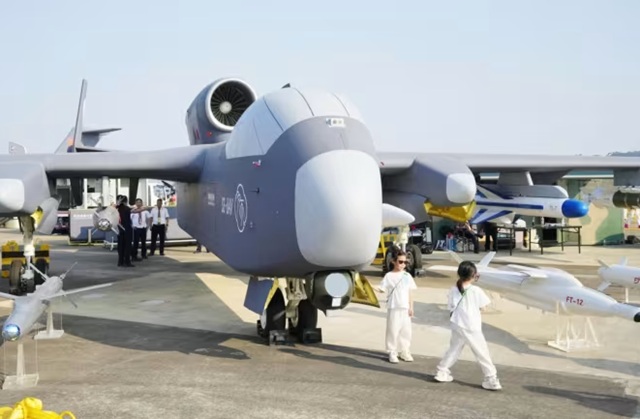
Unmanned aerial vehicles have further elevated the air force’s strategic role. The PLA’s Jiutian drone mothership, capable of launching up to 100 drones midflight, conducted its first flight this month, alongside the debut of the CH-7 stealth drone designed for high-altitude reconnaissance. These developments highlight the growing emphasis on air and drone warfare in China’s military planning.
Despite its current advantage, the air force has not been immune to corruption probes. In December 2023, Ding Laihang, a former air force commander, was removed from the Standing Committee of the National People’s Congress for serious disciplinary and legal violations. More recently, the PLA announced it is seeking information through June on improper procurement practices within the air force, including potential collusion and bribery in supply contracts.
Iida noted that the high cost of air force weapons systems creates ample opportunities for corruption. While the anti-graft campaign has so far had a limited impact on the branch compared with others, he warned that further purges of senior air force officials cannot be ruled out as Xi’s campaign continues.