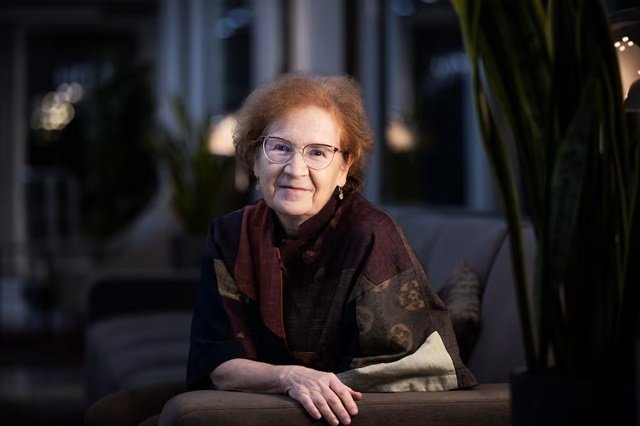
Spanish immunologist Margarita del Val has criticised what she sees as the growing superficiality of contemporary election campaigns and warned that the desire to remain in power is one of the biggest problems within the political class. She has called for politicians to place public well-being above personal career advancement, while arguing that scientific knowledge must play a more substantial role in public policy and government decision-making.
In an interview published by the Spanish newspaper El País, del Val, 67, reflected on the relationship between science and politics, the importance of democratic participation and the lessons of the COVID-19 pandemic. A researcher at the Spanish National Research Council (CSIC), she became one of Spain’s most recognisable scientific voices during the pandemic, explaining complex developments to the public at a time when scientific advice and government decisions were central to everyday life.
Del Val said her first experience of Spain’s democratic elections came in 1977, although she was too young to vote. She was 17 at the time, while the voting age was still 21. Nevertheless, she remembers the elections as a period of considerable enthusiasm and possibility, following the death of Francisco Franco. Having completed secondary school around the time Franco died, she said she had not fully understood the nature of Francoism but quickly recognised the significance of political freedom.
“I immediately understood what freedom was. That ability to decide with our vote what could happen, or at least to try to influence it,” she recalled. The 1977 elections, she said, generated a sense that there was much to achieve and that the country had new possibilities before it. That optimism gradually gave way to a more realistic understanding that not everything could be accomplished.
Her assessment of contemporary election campaigns is considerably less enthusiastic. Comparing them with the political atmosphere of 1977, she described current campaigns as “superficial”, arguing that elections should provide opportunities for more substantial discussion of major public issues. Although she recognised the importance of communicating political messages in accessible ways, she rejected the idea that accessibility required a reduction in depth. Information, she said, could be disseminated widely without becoming superficial.
Del Val became eligible to vote after Spain lowered the age of majority to 18. Her first vote was in the referendum on the Spanish Constitution on 6 December 1978. She remembers the occasion particularly clearly because she had obtained her driving licence that morning, developed a severe bout of flu and nevertheless went to vote despite feeling extremely unwell. She said she had voted in every subsequent election, sometimes casting her ballot by post when travelling.
Her understanding of the relationship between science and politics is shaped by the distinction she draws between political ideology and practical policy. Scientists, she explained, discuss concrete measures and policy decisions, although they may hold different personal political views. Within scientific work, however, independence, methodological rigour and the communication of established knowledge remain essential.
Del Val said scientists should communicate the international scientific consensus rather than promote the findings of their own research groups, universities or particular academic fields. That responsibility also requires communicating uncertainty. In science, she argued, asking questions is as important as providing answers. International scientific cooperation has reinforced her belief that researchers from different disciplines and countries often share similar ways of reasoning, even when their areas of specialisation differ.
She also called for substantially greater investment in Spanish research, pointing to the funding gap between Spain and other European countries. The resources available to research institutions abroad, she said, help explain their capacity to undertake major scientific work. She questioned why Spanish researchers should be regarded as exceptional merely for achieving results with considerably fewer resources.
Del Val cited the economic and public-health returns from vaccination as evidence of the value of scientific investment. According to the figures she discussed, every euro invested in COVID-19 vaccines generated a return of 60 euros in healthcare savings alone. When wider financial benefits, including the protection of economic activity, were included, the return increased to 800 euros for every euro invested. She argued that investment in research should therefore be accompanied by greater recognition of science, more training opportunities for younger researchers and greater stability in scientific careers.
Scientific independence, she maintained, should not mean separation from political institutions. Scientists need to remain closely connected to decision-makers so that public policies are informed by reliable evidence. “We are compelled to understand each other so that science can be useful to society,” she said, emphasising the importance of consultation and cooperation rather than isolation between the two communities.
She believes the COVID-19 pandemic helped establish that connection in Spain. Politicians did not necessarily discover during the crisis that scientists were important, she said, but researchers were able to establish direct links with political decision-makers and demonstrate that the country had scientists capable of providing expertise across a wide range of subjects and communicating their findings effectively.
However, greater public recognition of science has not necessarily produced deeper scientific understanding. Del Val said expressions such as “according to scientists” had become more common in everyday discussions, partly reflecting increased recognition of scientific expertise. Yet misinformation and superficial references to scientific authority remained concerns. Effective communication, she argued, was essential to making science accessible and interesting, including subjects beyond an individual’s own specialisation, such as climate change, physics and the possibility of life on Mars.
Her work coordinating the Global Health Platform at the CSIC, which brings together 180 research groups seeking to ensure that scientific knowledge reaches decision-makers, has also shaped her assessment of political engagement. The Confederation of Spanish Scientific Societies regularly meets representatives of political parties to examine their programmes and proposals. Del Val described these discussions as inspiring but cautioned that attractive policy commitments do not necessarily translate into practical action.
She said the challenge was not always a lack of political willingness or knowledge, but the limitations of what governments could achieve. Scientists therefore needed to identify priorities, maintain a clear list of necessary measures and recognise opportunities to advance them.
For del Val, voting remains the most effective way ordinary citizens can influence the future, particularly when individuals feel their personal contribution is limited. Asked to identify the biggest political failing, she answered: “The desire to cling to power.”
Governing was difficult, she acknowledged, comparing political responsibility with the experience of neighbourhood associations, where criticism often changes once individuals themselves assume leadership. Nevertheless, she argued that elected representatives should be genuinely concerned with public welfare rather than their own advancement. Politicians, she said, should have professional lives both before and after holding office, rather than making political careers their sole means of employment.