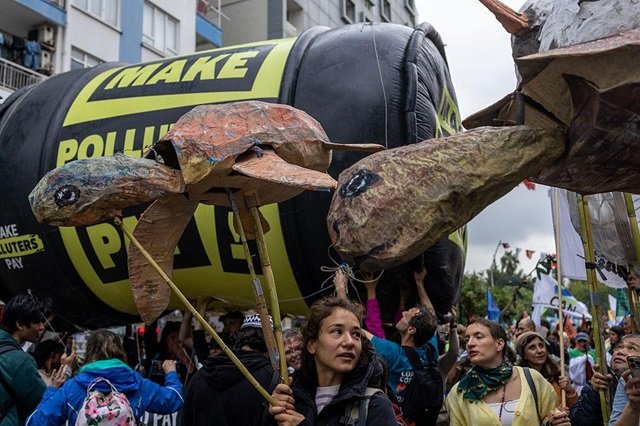
The Conference of the Parties (COP31), held in Antalya, Türkiye, with the participation of around 190 countries, appears to have left the world with little hope for meaningful progress on global climate action. Unlike COP21 in Paris and COP26 in Glasgow, which attracted considerable global attention and raised expectations, with a number of countries announcing target dates for achieving net-zero emissions, COP31 appears to have generated little enthusiasm among climate activists around the world. This is mainly because, despite the many COP meetings held in the past, there has been little tangible change in the ground realities concerning global climate conditions.
The United Nations Environment Programme’s Limiting Overshoot report warns that global temperatures are likely to exceed 1.5°C above pre-industrial levels within the next few years. However, this warning does not appear to have been taken seriously, judging by the discussions and deliberations at COP31.
Most COP meetings in recent years have largely focused on demands for financial support from developed countries to developing countries. At the previous summit in Baku, wealthy nations agreed to provide at least US$300 billion annually by 2035, while governments committed to working towards mobilising US$1.3 trillion from all sources. Yet disagreements continue over which countries should provide the funding, on what terms, and what should qualify as climate finance.
At the same time, the United States, considered one of the world’s largest emitters of greenhouse gases, did not participate directly in COP31 and did not send an official federal delegation. The non-participation of the United States, one of the largest emitters and the wealthiest country in the world, gives the impression that COP31 has not been a truly representative international gathering.
In any case, while demands for financial support dominated the proceedings, it is significant that the new draft text of COP31 makes no mention of a fossil fuel transition plan.
It is widely recognised that the use of fossil fuels, such as coal and crude oil, together with methane emissions from agricultural activities and livestock, as well as methane leaks during natural gas transportation, are major contributors to global warming. Without significantly curbing the use of fossil fuels and reducing these emissions, it will not be possible to limit global warming and prevent a climate disaster. However, there are several major technological challenges in producing environmentally friendly energy in sufficient quantities to match the energy output of fossil fuels at competitive costs.
Renewable energy sources such as wind and solar power are considered suitable environmentally friendly alternatives to fossil fuels. However, the problem is that solar and wind power generation depends on seasonal, climatic and weather conditions, which vary from time to time. Furthermore, the capacity utilisation of renewable energy sources such as solar and wind power is often around 25% on average, compared with 60% or more for some fossil-fuel-based power generation technologies.
Green hydrogen is certainly an environmentally friendly energy source and could effectively replace fossil fuels to a considerable extent if green hydrogen projects were established in large numbers across the world. However, the present challenge with green hydrogen is its production cost, which remains higher than that of energy derived from fossil fuels. If green hydrogen were to completely or substantially replace fossil fuels today, the cost of power generation and the production of several derivative products, such as fertilisers, would increase considerably. Such costs could exceed what consuming industries can afford and would undoubtedly have significant implications for the global economy.
In these circumstances, the expectation that economically viable, environmentally friendly energy sources will become available in sufficient quantities to completely replace fossil fuels appears to be a utopian aspiration. As things stand today, those advocating such an outcome without adequately addressing the technological and economic constraints are arguably overlooking the realities.
There are countries such as Russia, Saudi Arabia, Iraq, Iran, Kuwait, Qatar, Venezuela and the United States that are major producers of crude oil and natural gas. These countries cannot afford to discontinue the production of crude oil and natural gas without seriously disrupting their national economies.
Similarly, countries that depend heavily on coal, such as China, India, Indonesia and Australia, cannot afford to stop coal production for use as an energy source without facing substantial economic consequences.
Certainly, financial support is required to develop the technologies needed to make environmentally friendly energy sources competitive with fossil fuels in all respects. Such technologies can be developed relatively quickly only by advanced countries, rather than by developing or underdeveloped countries. This raises an important question: what can developing and underdeveloped countries actually do with the funds provided by wealthy nations? Of course, they can use the funds to establish renewable energy projects and undertake related initiatives. However, without the necessary technological advances and optimisation, such projects alone will not meet global energy requirements or provide a comprehensive solution to the climate crisis.
Given this grim scenario, efforts to address global climate change and mitigate global warming appear to be back to square one.
Obviously, this may help explain why the draft outcome text of COP31 makes no mention of a fossil fuel transition plan. This omission is particularly glaring and reflects the underlying limitations and constraints confronting efforts to advance effective global climate management.
It is no wonder, therefore, that COP31 is ending up as yet another talk show on the global climate crisis.