Israel’s escalating attacks on Iran have sent shockwaves through global energy markets, with China particularly exposed due to its heavy reliance on Middle Eastern oil. According to a report by the Financial Times, the conflict threatens to sever China’s access to critical energy partners, disrupting its ambitions for regional influence and underscoring its urgent push for energy independence.
For years, China has leveraged its strategic partnership with Iran to secure discounted oil and expand its geopolitical footprint in the Middle East. Iranian crude, alongside supplies from Gulf states, has formed a crucial pillar of China’s energy security. But as tensions mount between Israel and Iran, those relationships are being tested.
Chinese President Xi Jinping called this week for all parties to “prevent further escalation,” urging calm amid fears of broader regional conflict. Beijing also pushed back against U.S.-led sanctions, insisting Washington should not interfere with what it described as China’s “normal trade” with Iran.
Experts say China has much to lose. “If this situation continues to escalate, then they lose quite a bit, both in terms of their energy security and Iran as a strategic card that China holds,” said Gedaliah Afterman of the Abba Eban Institute for Diplomacy and Foreign Relations in Israel.
Since the reintensification of U.S. sanctions on Iran in 2018, China has become Tehran’s economic lifeline, buying most of its oil and supplying industrial goods, vehicles, and nuclear technology. Iranian oil accounted for up to 15% of China’s total crude imports last year, based on data from the U.S. Energy Information Administration.
However, those imports have already started to wane. According to shipping data from Kpler and Bernstein, China’s purchases of Iranian crude dropped from 1.6 million barrels per day in September 2024 to just 740,000 barrels in April 2025, as threats of additional U.S. sanctions grew.
Analysts warn that further deterioration in Iran’s oil exports could push China to rely more heavily on alternative suppliers like Saudi Arabia, Russia, and Malaysia — the latter often serving as a re-export hub for Iranian oil disguised to avoid sanctions.
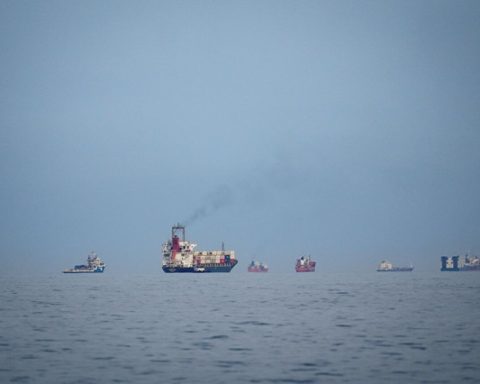
The potential for Iran to block the Strait of Hormuz—a key chokepoint for global energy shipments—has raised fresh alarms. Hundreds of billions of dollars in oil and gas flow through the waterway annually, including from Saudi Arabia, China’s top crude supplier outside Russia. A full-scale regional conflict could jeopardize those flows, impacting China’s access to both oil and liquefied natural gas (LNG).
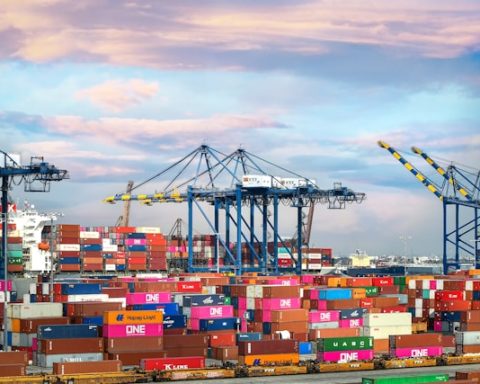
China does not disclose its exact petroleum reserve levels, but Oxford Institute of Energy Studies estimates suggest it holds roughly 90 to 100 days’ worth of supply across strategic and commercial storage. Yet disruptions would still likely force Chinese importers into the expensive spot market, especially for LNG, 25% of which came from Qatar and the UAE in 2024, according to S&P Global.
While immediate risks are high, analysts say the crisis may accelerate China’s long-term drive for energy self-sufficiency. “If it wasn’t happening fast enough before, it will be happening even faster now,” said Neil Beveridge, head of Asia-Pacific research at Bernstein. China’s transition to renewables has already pushed wind and solar to make up 56% of power capacity in 2024, up from just one-third a decade earlier.
But geopolitical risks remain. Though Beijing seeks to portray itself as a stabilizing force—offering peace plans and mediating regional rivalries—it has so far stayed largely passive in the Iran-Israel crisis, as it did during last year’s collapse of the Assad regime in Syria.
China’s 25-year cooperation pact with Tehran and Iran’s 2023 accession to the China-led Shanghai Cooperation Organisation reflect its bid to lead an alternative to Western-led diplomacy. But experts say its influence has clear limits.
“The demise of Iran as a regional power is not good news for China,” said Yun Sun of the Stimson Center. “That indirectly means American influence has expanded.”
In the short term, analysts suggest China may enjoy a brief reprieve from U.S. strategic pressure as Washington focuses on the Middle East. But in the longer term, the erosion of Iran’s stability threatens Beijing’s energy lifelines and its broader vision for a reshaped world order in which China plays a central role.