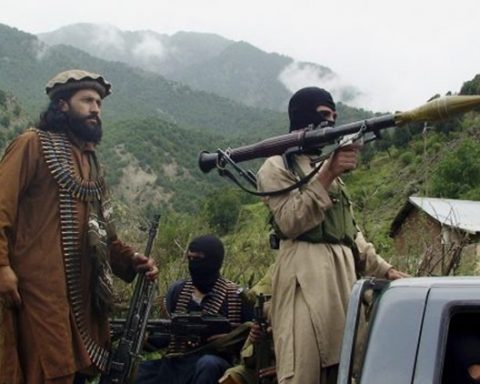

Sky News published a video this month that opens on a rigged explosive device and a pickax under a stark title card, “Inside the Taliban’s Museum of Death.” Three seconds pass before a voice explains anything. By the time special correspondent Alex Crawford appears on screen, the viewer has already absorbed the image the Taliban built the display to produce, violence, spectacle and the mythology of terrorism turned into history.
The problem is not that Sky News entered the museum. The Taliban’s transformation of wartime violence into curated exhibits is itself newsworthy. The problem is what happens when the visual language of an extremist movement is placed at the centre of a short-form news report, before the audience has been given enough context to understand what it is looking at.
Crawford’s report, in fact, does something considerably more nuanced than simply pointing a camera at weapons. She travels to graves near Kabul and allows villagers to explain, in their own words, why some eventually supported the Taliban. Their explanations are rooted less in ideology than in grief. Residents describe British troops killing relatives and say those losses pushed them towards the very movement they had once resisted. The report ultimately suggests that years of war, civilian suffering and unresolved grievances helped turn parts of a generation towards the Taliban.
That reporting matters. It draws attention to the human consequences of war and to the grievances that terrorist organisations exploit. Yet the irony is difficult to ignore that the report’s most powerful images come from a space deliberately designed by the Taliban to frame its own violence as heritage.
Suicide-vest components, weapons and other objects are arranged behind glass. Placards give them meaning. The museum does not simply preserve history; it interprets history through the worldview of the movement that created it. In that sense, journalists visiting such sites in Balkh, Wardak and elsewhere are not necessarily discovering raw historical material. They are entering a carefully constructed environment in which violence has already been selected, arranged and narrated.
Accounts from Afghan residents and researchers have underscored this concern. KabulNow reported that such exhibits are intended to honour the group’s suicide bombers and project fear rather than simply preserve historical memory. Amu TV has separately reported families in Balkh and Daikundi viewing such museums not as symbols of triumph, but as reminders of tragedy because similar weapons and objects were connected to the deaths of people they loved.
This distinction is important. A museum created by a terrorist organisation is not a neutral archive simply because its objects are displayed behind glass. The glass does not remove the propaganda; it can institutionalise it.
That is why the framing of the Sky News report deserves scrutiny. Calling it the “Museum of Death” may sound critical, but the dramatic language also risks reproducing the Taliban’s theatrical instinct, take the machinery of war, place it in a striking setting, and turn it into an image powerful enough to command attention. In an era of short-form video, that distinction becomes increasingly important.
The Taliban’s record of violence cannot be separated from the objects now placed on display. Behind weapons and suicide-bombing equipment are the casualties of a long conflict, including dead civilians, fallen soldiers, mutilated bodies, orphaned children and families whose lives were permanently altered. This is particularly striking given that the same Taliban fought British forces in Afghanistan and killed British servicemen and women. There is an uncomfortable moral contradiction when the machinery of that can later appear on international television primarily as dramatic visual content.
The danger, therefore, is not simply “glorification” in the crude sense of praising the Taliban. A newsroom does not have to endorse an ideology to inadvertently amplify its preferred imagery. Propaganda can travel through exposure as well as endorsement.
Access journalism makes this problem more complicated. The deal a reporter strikes to get inside a place like this, accompanied by minders, filming what is permitted, on a timeline shaped by the hosts, can influence what ultimately enters the frame long before the script is written. Sky’s team did not fabricate the museum. Nor does Crawford’s reporting amount to an endorsement of Taliban ideology. But when material curated by a terrorist movement is packaged for a platform that rewards the first few seconds of attention, framing decisions acquire an importance of their own.
Newsrooms covering the Taliban’s second act will face this tension repeatedly, including at museums, military parades, government buildings and official press tours. Refusing access altogether may accomplish little beyond allowing the Taliban to control the narrative without scrutiny. The better answer is not necessarily less reporting, but more context and more deliberate framing.
Imagine, for example, beginning with the graves Crawford visits and the families who describe what the war cost them. Establish the human consequences first. Then show the objects in the museum. The same suicide vest would suddenly mean something different. It would no longer arrive as an arresting piece of terrorist imagery; it would arrive as evidence of a history that produced victims, grief and political consequences.
That is ultimately the editorial responsibility when war museums become content. Journalists cannot prevent terrorist groups from constructing their own monuments to violence. They can, however, refuse to let those monuments dictate the emotional architecture of the story.
The Taliban may curate the museum. The newsroom must curate the context.
Without that context, international television risks giving an extremist movement something it has always sought, not necessarily agreement, but attention; not necessarily legitimacy, but spectacle. And when the machinery of terror becomes television spectacle, the question is no longer simply whether the story was reported. It is whether the reporting allowed the people who built the spectacle to decide what the audience saw first and what they were meant to feel when they saw it.