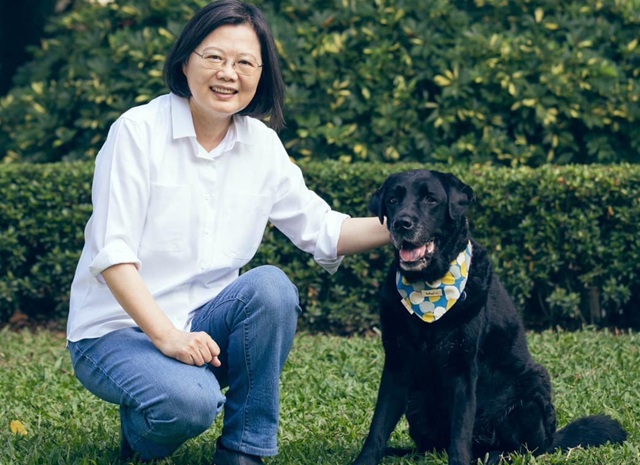
In her eight years as president of Taiwan, Tsai Ing-wen led the island nation through an era of growing threats and geopolitical challenges, all while reinforcing Taiwan’s democratic values and strengthening its military defenses. With the looming uncertainties surrounding Taiwan’s international security, Tsai’s leadership remains a focal point as she prepares for her next steps on the global stage.
During her presidency, Tsai was faced with increasing pressures from China, which has long viewed Taiwan as a renegade province. Beijing’s calls for reunification by force intensified, and Tsai had to skillfully manage Taiwan’s international relations, especially with the United States. However, as The Times UK reports, one of her significant concerns today is the unpredictability of U.S. leadership, particularly with former President Donald Trump back in power.
Trump’s relationship with Taiwan had been strong during his first term, but recent statements and shifting policies have left Taipei on edge. Trump had publicly criticized Taiwan’s defense spending, questioning whether the island was contributing adequately to its own defense. Tsai acknowledges these concerns, stating, “We got that message and we’ll be more than happy to talk about strengthening our defense capability.” She emphasizes Taiwan’s readiness to increase investment in its defense forces to address U.S. concerns and ensure the island’s security against increasing threats.
Her diplomatic skill has been honed over years of delicate negotiations, notably with the Trump administration. Tsai recalls, “Strong, frequent, and clear communication on national security was the foundation of my bond with the Trump administration.” This relationship helped Taiwan secure critical arms deals, including the $8 billion purchase of F-16 fighter jets. This collaboration elevated Taiwan’s defense capacity at a time when Chinese military expansion, especially in the South China Sea and the Taiwan Strait, became increasingly concerning.
But while Tsai found success in maintaining a close alliance with the U.S., her leadership was also tested by the larger geopolitical landscape. The war in Ukraine provided Taiwan with an opportunity to demonstrate its strategic thinking on global security. Reflecting on Russia’s invasion of Ukraine, Tsai remarked, “I’m sure that Beijing is watching the Ukraine war very closely and trying to learn from the conflict. I hope that they draw the lesson that waging a war across the Taiwan Strait is going to cost them a lot [militarily, politically, and financially].” She firmly believes that any Chinese military adventurism against Taiwan would have dire consequences not just for the island, but for global stability.
Despite facing these enormous challenges, Tsai’s administration also focused on Taiwan’s economic resilience and global standing. Taiwan has long been a critical player in the global semiconductor industry, and Tsai underscored the island’s importance beyond just economic terms. “Taiwan has gained global prominence because of the success of its semiconductor industry, but the world should know that Taiwan is much more than a leading chip manufacturer,” she stated. The country’s values, including its commitment to democracy and human rights, helped set Taiwan apart on the world stage. Under her leadership, Taiwan became the first in Asia to legalize same-sex marriage, a historic moment for LGBTQ rights in the region.
However, Taiwan’s diplomatic isolation remains a serious challenge. Due to Chinese pressure, only 12 countries formally recognize Taiwan as a sovereign state. This has severely restricted Tsai’s international engagements. In an attempt to shore up Taiwan’s global alliances, she visited countries like the Czech Republic, France, and Canada. A planned visit to the United Kingdom was postponed, a casualty of the timing of the British Foreign Secretary’s visit to Beijing. Despite these setbacks, Tsai remains steadfast in her belief that Taiwan’s message needs to reach the world.
On the topic of the United Kingdom’s evolving stance towards China, Tsai expressed concerns but also acknowledged that diplomacy requires balance. She commented, “If the Labour Party gets to know the Communist authorities better, there could be possibilities for maintaining balance across the Taiwan Strait.” Taiwan is fully aware of the complexities of international politics, especially when it involves major powers like China and the U.S.
Perhaps most telling of Tsai’s leadership is her unflinching commitment to Taiwan’s autonomy and defense. While maintaining a stance of strategic ambiguity on Taiwan’s independence, Tsai has made it clear that Taiwan is already, in many ways, a sovereign entity. “We are pretty much on our own,” she said, citing Taiwan’s fully functional government, military, and judiciary. “We have everything.”
Taiwan’s resilience, Tsai emphasized, is rooted not only in its ability to survive but in its unwavering commitment to uphold democratic values. “Nobody should underestimate our resolve to defend our freedom and democracy,” she said, reaffirming Taiwan’s stance in the face of mounting pressures.
Despite her formidable public role, Tsai’s personal journey is equally compelling. Describing herself in her younger years as a quiet and reserved individual, she acknowledged how politics had forced her to evolve into a more public figure. “Politics destroyed that part of my life. I used to be very quiet and didn’t want to be too bothered by other people,” she reflected. Now, as a former president and an influential figure in Taiwan’s Democratic Progressive Party, Tsai’s voice continues to shape the island’s international strategy.
With tensions across the Taiwan Strait unlikely to ease anytime soon, Tsai’s diplomatic legacy will likely serve as a critical foundation for Taiwan’s continued fight for survival in an increasingly divided world. Whether or not her successor, President Lai Ching-te, will carry forward her strategies remains to be seen. However, Tsai’s unyielding resolve and her careful balancing act between defense, diplomacy, and international values will undoubtedly remain a benchmark for Taiwan’s future.