An investigation by The Sunday Times, UK, has revealed critical vulnerabilities in Britain’s air and missile defences, raising concerns that the UK could be struck by ballistic missile attacks within the next 15 years. NATO is expected to press the UK to substantially increase defence spending as part of its broader strategy to address emerging threats from adversaries like Russia, China, and Iran.
NATO Demands Increased Defence Spending
NATO will formally urge Sir Keir Starmer’s government to prioritize investment in air and missile defence in its 2024 updated force requirements, known as the Capability Target 2025. Defence sources highlight growing frustration among NATO allies over the UK’s insufficient contribution to defensive shields necessary for Europe’s protection against long-range missile attacks.
An independent panel leading the UK’s strategic defence review, chaired by Lord Robertson of Port Ellen and General Sir Richard Barrons, has expressed deep concern over the country’s inadequate missile defence systems. The panel is expected to recommend urgent investment in Surface-Based Air Defence (SBAD) systems to protect critical infrastructure such as military bases and nuclear power plants.
Growing Threats from Global and Non-State Actors
The investigation highlights the escalating risks posed by advanced missile technologies from state and non-state actors alike:
- Iran’s Arsenal: Iran’s stockpile of ballistic missiles, including the Emad and Ghadr, can travel at speeds exceeding 4,600 mph and threaten the UK’s overseas bases.
- Russia’s Advancements: With missiles like the Mach-10 Oreshnik capable of hitting targets 3,410 miles away, Russia’s arsenal underscores the urgency for enhanced defences.
- China and the US Hypersonic Arms Race: Hypersonic missiles, which are highly maneuverable and harder to intercept, represent a new dimension of threat.
- Non-State Actors: Iranian-backed Houthis and other militant groups in the Middle East have already demonstrated their capability to use ballistic missiles, raising concerns about potential threats to UK soil and military bases in Cyprus.
A senior military source warned, “In 15 years, a ballistic missile will be able to hit Britain from anywhere in the world.”
Case in Point: Cyprus Vulnerabilities
The vulnerability of Britain’s overseas military installations was starkly illustrated during an October missile barrage by Iran against Israel, visible from the UK’s Akrotiri base in Cyprus. British personnel witnessed streaks of light across the Mediterranean as Iran launched 200 ballistic missiles. This event highlighted the lack of air defence systems at British bases, raising alarms about the potential for future attacks on critical infrastructure and intelligence facilities.
The Technology Gap
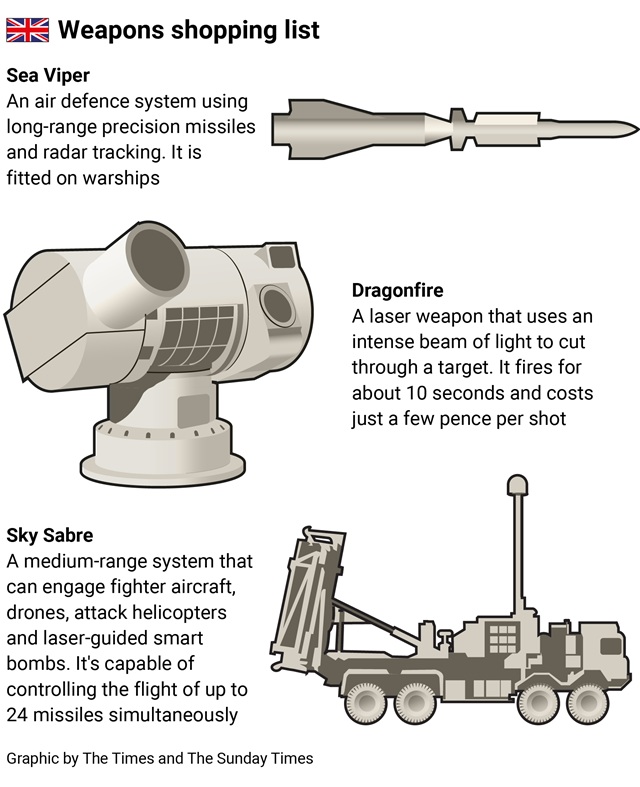
The UK’s reliance on its ageing fleet of Type 45 destroyers has exposed significant limitations in defending against ballistic missile threats. While Type 45 destroyers are equipped with the Sea Viper missile system, experts believe they are ill-equipped to handle more advanced threats posed by long-range and hypersonic missiles.
Land-based air defences are similarly underdeveloped:
- Sky Sabre: Britain’s primary ground-based air defence system is limited to short-range threats like drones and fighter jets.
- Radar Gaps: The UK’s only ballistic missile radar, based at RAF Fylingdales, will not be upgraded until 2029 due to cost-cutting delays.
In stark contrast, allies like the US and Israel have invested heavily in layered missile defence systems, including Israel’s Iron Dome and Germany’s £3.2 billion Arrow 3 system.