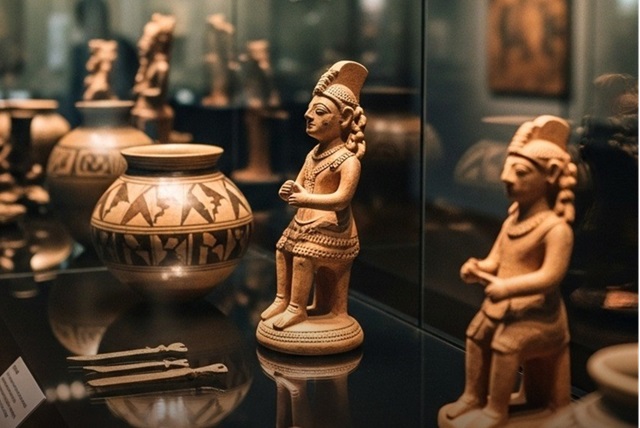
When Italy returned nearly 100 stolen artifacts, some dating back 5,000 years, to Pakistan last week, it was far more than a diplomatic gesture. It was a moral reckoning, a civilizational homecoming, and a moment of luminous cooperation in a world too often divided by self-interest and neglect of history. These relics, looted from the ancient sites of Kuli and Naal in Balochistan, belong to a forgotten dawn, a time before the Indus Valley Civilization rose to prominence, when humanity was still learning to shape clay and carve memory into permanence.
The Long Journey Home
According to Pakistan’s embassy in Rome, the artifacts, seized by Italian authorities from smugglers, were officially handed over in Rome and arrived in Pakistan on October 30, 2025. The cache includes pottery, terracotta figurines, and painted vessels typical of the early Bronze Age settlements of Balochistan, considered precursors to the great Indus cities of Mohenjo-Daro and Harappa.
Seven other pieces had been returned earlier this year, in April, to Pakistan’s Consulate General in Milan. Over the past 18 years, Italy has recovered and repatriated nearly 100 pieces of Pakistani heritage, a testament to sustained cooperation, respect, and shared commitment to cultural preservation.
Beyond the numbers lies something deeper: a recognition that stolen heritage is not merely an art crime; it is an assault on collective identity.
Balochistan: The Cradle Before Civilization
The sites of Kuli and Naal are among South Asia’s earliest archaeological treasures. Long before the Indus Valley’s planned cities and writing systems emerged, the people of Balochistan were experimenting with agriculture, pottery, and social organization. Excavations in Naal, near modern-day Khuzdar, have revealed elaborate pottery adorned with geometric designs, evidence of sophisticated aesthetic sensibilities dating to around 3000 BCE.
UNESCO and the Department of Archaeology of Pakistan consider these sites foundational to understanding the region’s prehistoric development. The recovered artifacts, therefore, are not just objects; they are chapters of humanity’s earliest story. Each shard of clay carries the fingerprint of a long-gone artisan, and each motif on a vessel whispers of rituals, trade, and mythologies now silent.
By returning these items, Italy has done more than rectify a theft. It has restored fragments of a people’s memory.
A Global Trade in Stolen Time
Cultural heritage theft is a multi-billion-dollar global enterprise. UNESCO estimates that illicit trafficking of antiquities ranks among the top three international crimes, after drugs and arms. According to Interpol’s 2024 report, over 50,000 cultural items were seized worldwide in a single year, with South Asia and the Middle East among the hardest-hit regions.
Pakistan’s losses are staggering. Over the past few decades, countless artifacts from Balochistan, Swat, and the Indus Valley have surfaced in illegal markets across Asia. Each stolen item is not merely contraband; it represents the erasure of context, an artifact torn from the soil that gave it meaning. Once sold, its origin fades, its story silenced.
Italy has emerged as one of the few nations actively collaborating with origin countries to repatriate looted art. Through specialized art-crime units such as the Carabinieri Command for the Protection of Cultural Heritage, the world’s first police force dedicated to cultural property, Italy has led hundreds of recovery operations since its formation in 1969. It is a poignant irony that the land of Rome, which once plundered half the known world, now stands as a defender of others’ antiquities.
Diplomacy Through Heritage
The Pakistani embassy’s statement aptly described the event as an “outstanding example of excellent cooperation between two friendly states, both being homes to ancient civilizations and UNESCO sites.” Indeed, Italy’s return of these artifacts is not just a diplomatic courtesy; it is cultural diplomacy at its finest, a language of respect that transcends borders and epochs.
Over the last two decades, Pakistan and Italy have quietly deepened their cultural ties. Italian archaeologists have worked alongside Pakistani scholars in Balochistan and Swat, uncovering prehistoric relics, tools, and ancient pottery. Such collaborations are building bridges where politics often fails. They affirm a truth too often ignored: civilizations flourish not through conquest but through shared curiosity.
Why This Matters More Than Ever
In an age of rapid globalization and cultural homogenization, heritage repatriation has become a moral imperative. Artifacts do not belong behind glass in foreign museums; they belong within the landscapes that shaped them. When returned, they rekindle national pride, inspire local scholarship, and strengthen the global principle that culture is not a commodity.
The return of these Balochistan relics comes at a moment of renewed global attention to restitution. Many states have all faced growing pressure to return colonial-era artifacts to Africa and Asia. The Benin Bronzes, looted from Nigeria in 1897, have begun to make their way home. Egypt continues to demand the return of the Rosetta Stone. Greece has never ceased asking for the Parthenon Marbles.
Each case reminds us that heritage, once stolen, leaves a wound that only justice, however delayed, can heal.
A Civilization Rekindled
When the crates arrived in Islamabad on October 30, they carried more than relics. They carried recognition. In each terracotta figurine lies a whisper of the women who shaped them; in every painted pot, the echo of artisans who once believed that beauty could outlast time. And now, thanks to the perseverance of diplomats, archaeologists, and moral allies, those echoes have come home.
As one Italian curator remarked during the handover ceremony:
“These objects are not lost treasures returning; they are conversations between civilizations, resuming after five millennia.”
In that single sentence lies the profound triumph of this moment, a reminder that while history can be stolen, it can also be reclaimed.