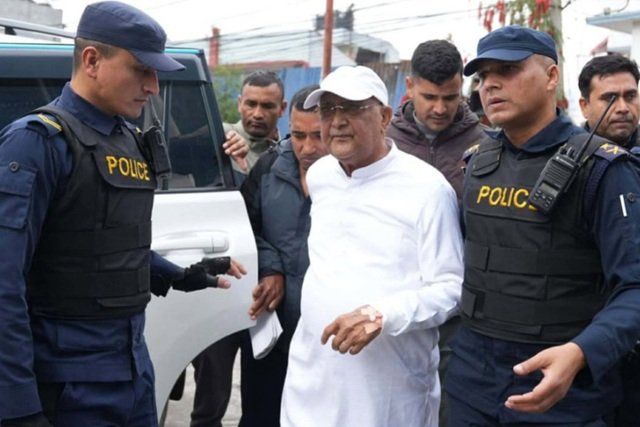
On March 28, 2026, the arrest of former Prime Minister K.P. Sharma Oli and former Home Minister Ramesh Lekhak marks a critical inflection point in Nepal’s contemporary political trajectory. Executed within hours of the new administration assuming office under Prime Minister Balendra Shah alias Balen, the move signals a decisive – if belated – shift toward political accountability in the aftermath of the September 8-9, 2025 Gen Z protests and the state’s violent response. At one level, this is a legal development; at another, it represents a long-deferred political reckoning.
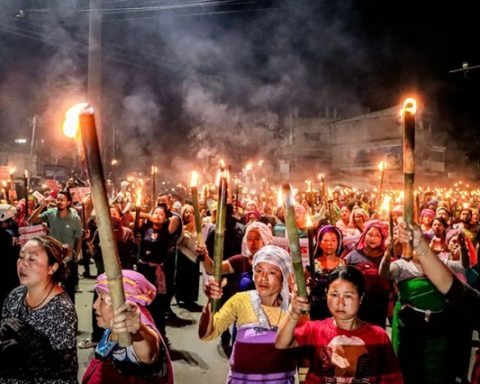
The protests, initially triggered by a controversial social media ban, quickly evolved into a nationwide articulation of dissent. Driven by a digitally mobilised and politically assertive younger generation, the movement transcended its immediate trigger to reflect deeper structural discontent – economic stagnation, unemployment, governance deficits, and a growing perception of democratic erosion. The escalation into widespread unrest, culminating in at least 77 fatalities, including minors, exposed the fragility of Nepal’s post-monarchical democratic order and the state’s limited capacity to manage mass mobilisation without resorting to coercive force.
The findings of the inquiry commission led by former justice Gauri Bahadur Karki provide the institutional basis for the arrests. Crucially, while the commission refrains from establishing a direct chain of command ordering the use of lethal force, it underscores systemic negligence and a failure of command responsibility. The observation that authorities made “no effort… to stop or control the firing” points to a breakdown in crisis governance mechanisms. In conflict analysis, such a disjuncture between political authority and operational conduct often indicates either tacit political sanction or deeper institutional dysfunction – both of which erode democratic legitimacy.
The arrest of the former Prime Minister and Home Minister must therefore be understood within a broader framework of vertical accountability. In South Asia, where political executives are seldom held liable for the actions of Security Forces (SFs), this development is particularly significant. It suggests an attempt by the Nepali state to bridge the persistent gap between authority and responsibility. The role of Home Minister Sudan Gurung in operationalising the arrests reinforce the new administration’s stated commitment to the rule of law, even as it navigates a politically sensitive environment.
The unfolding situation is not, however, without risks. The immediate mobilisation of cadres belonging to the Communist Party of Nepal-Unified Marxist Leninist (CPN-UML) in Kathmandu underscores the enduring salience of partisan loyalties. The framing of the arrests as politically motivated retaliation, rather than a judicially grounded process, has the potential to deepen political polarisation. Protests and organisational resistance may test the Shah government’s ability to maintain order while upholding democratic freedoms-an equilibrium that proved elusive under the previous regime.
Nepal appears to be entering a phase of transitional accountability without a structured transitional justice framework. Unlike post-conflict societies that institutionalise mechanisms such as truth commissions or reconciliation processes, Nepal’s current approach remains reactive and case-specific. This raises concerns regarding consistency, due process, and the potential selectivity of prosecutions. If accountability measures are perceived as partisan, they risk exacerbating political fault lines rather than mitigating them.
The generational dimension of the protests is equally consequential. The so-called Gen Z movement represents a qualitative shift in Nepal’s political mobilisation. Characterised by decentralised organisation, digital coordination, and issue-based activism, it operates largely outside traditional party structures. This transformation presents a structural challenge to the state, which has historically relied on hierarchical and party-mediated channels of engagement. The inability of the Oli administration to anticipate or respond effectively to this shift contributed significantly to the escalation of the crisis.
The legal trajectory of the cases against Oli and Lekhak will be central to shaping Nepal’s democratic future. The prospect of custodial sentences of up to 10 years underscores the seriousness of the charges. More importantly, the credibility of the judicial process will serve as a litmus test for institutional integrity. Transparent and impartial proceedings could establish a significant precedent for accountability in South Asia, where impunity for state violence often prevails. Conversely, any perception of procedural compromise could delegitimise both the process and its outcomes.
An additional layer of complexity arises from the apparent hesitation to proceed simultaneously against sections of the security leadership. Reports suggest that action against senior police officials may be deferred pending further review. Such partial accountability risks reinforcing a culture in which operational actors remain insulated while political executives bear disproportionate responsibility. Effective conflict resolution, however, requires a comprehensive approach addressing both political decision-making and operational conduct.
The arrests of K.P. Sharma Oli and Ramesh Lekhak represent a moment of both opportunity and uncertainty for Nepal. They reflect an emergent willingness within the state to confront past excesses and restore public confidence in governance. Yet, the durability of this shift will depend on the integrity of the legal process, the restraint exercised by political actors, and the state’s capacity to address the structural drivers of dissent. For Nepal, the challenge extends beyond retrospective justice. It lies in institutionalising accountability, strengthening crisis response mechanisms, and constructively engaging a politically assertive younger generation. Without such measures, the cycle of protest and repression that culminated in the 2025 crackdown is unlikely to be broken, leaving Nepal’s democratic consolidation incomplete and contested.