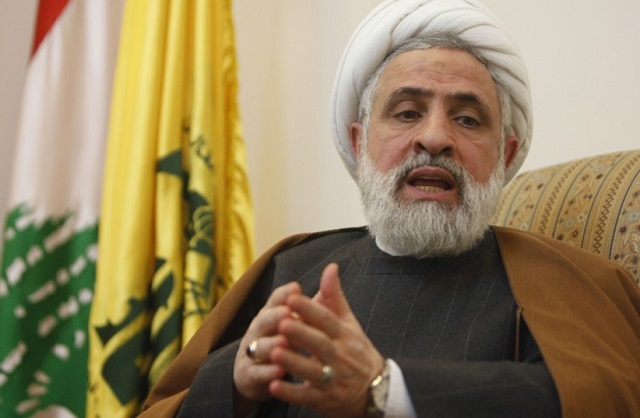
In a statement issued on Wednesday, 25 March 2026, Hezbollah’s Secretary-General, Sheikh Naim Qassem, framed the ongoing conflict in Lebanon as part of a broader “American-Israeli project” aimed at creating a so-called “Greater Israel” stretching from the Euphrates to the Nile. According to Qassem, this expansionist vision threatens Lebanon’s sovereignty, independence, and national cohesion, with persistent Israeli aggression continuing well beyond the November 2024 ceasefire. The statement emphasizes that Hezbollah’s resistance is not only a military necessity but a patriotic duty that requires national unity across all sectors of Lebanese society.
Qassem asserted that Israeli attacks on Lebanon did not cease after the formal agreement in late 2024, but continued for fifteen months, targeting civilians, infrastructure, and agricultural resources. He praised the young Lebanese fighters who have died defending the country, portraying them as heroic symbols of nationalism and liberation. According to the secretary-general, Hezbollah’s actions are a response to occupation and aggression, not an intervention on behalf of other states, describing the conflict as fundamentally defensive and rooted in the protection of Lebanese citizens and land.
The statement frames resistance as a collective obligation that involves the government, military, political parties, sects, and ordinary citizens alike. Qassem accused the American-Israeli coalition of attempting to weaken Lebanon by provoking sectarian strife, undermining national institutions, and controlling political decisions to align with Israel’s strategic objectives. In this context, he rejected any negotiations with Israel while it maintains an occupying presence, characterizing such discussions as a demand for surrender that would strip Lebanon of its capabilities and sovereignty.
Hezbollah emphasized the principle of national unity as a critical strategy to counter the aggression. Qassem urged all Lebanese factions to consolidate efforts under a single banner focused on halting Israeli attacks and liberating occupied territory. He warned that divisive policies or actions that criminalize the resistance would only serve the goals of the Israeli project. Unity, he argued, would not only undermine the occupier’s ambitions but also strengthen Lebanon’s ability to rebuild and defend itself collectively.
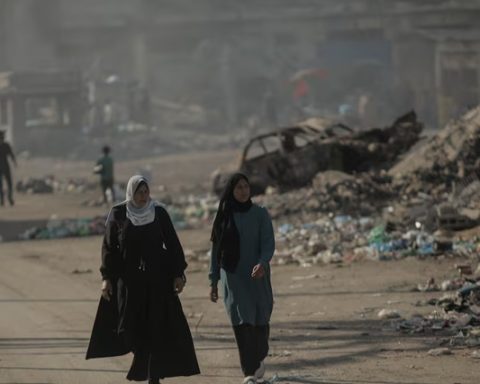
The statement further details the humanitarian consequences of the ongoing aggression, highlighting civilian casualties, mass displacement, and the destruction of homes, infrastructure, and crops. Qassem portrayed Israel as cowardly in the face of Hezbollah’s resistance, asserting that neither the fighters nor the Lebanese people will be defeated despite the heavy sacrifices. Drawing on religious conviction, he cited the Quranic verse, “And We want to make the weak strong in the land and make them inheritors,” framing resistance as both a moral and national imperative.
In addition to highlighting Lebanon’s struggle, the statement referenced the role of Iran in opposing what Qassem described as global American-Israeli aggression. He presented Iran as an example of steadfast resistance, emphasizing that victories against the United States and Israel would benefit all nations confronting occupation or intervention. Qassem suggested that Hezbollah draws lessons from Iran’s experience in facing powerful adversaries, framing the struggle as both regional and symbolic in the broader context of resisting foreign dominance.
The secretary-general’s remarks portray Hezbollah not only as a military actor but also as a central unifying force within Lebanon, tasked with defending sovereignty and national identity. By emphasizing national unity, civilian participation, and moral legitimacy, the statement situates Hezbollah’s resistance within a framework of patriotic duty that extends across sectarian and political lines. It calls on the Lebanese government to support rather than hinder these efforts, asserting that any action contrary to the resistance’s objectives would ultimately advance Israeli ambitions.
Qassem’s statement comes amid escalating tensions in the region, with Hezbollah positioning itself as the principal defender of Lebanese sovereignty. The organization’s rhetoric combines a critique of foreign intervention, a call for domestic cohesion, and a reinforcement of its ideological commitment to resistance. By framing the conflict as both defensive and national, the message seeks to mobilize broad-based support while signaling resilience in the face of continued military and political pressure.
The discourse underscores Hezbollah’s long-standing view of Lebanon’s security as inextricably linked to regional geopolitics. Qassem’s remarks reflect a dual focus: confronting immediate military threats and reinforcing a narrative of Lebanese self-determination against what he describes as a concerted effort to impose foreign control. The call for unity, he argues, is essential to countering aggression, preserving sovereignty, and advancing the nation’s collective interests.
The statement concludes with an affirmation of steadfast resistance and confidence in ultimate victory. Qassem invoked both national and religious symbolism, suggesting that Lebanese resilience, in tandem with regional allies, will withstand external pressures. Hezbollah frames its continued operations as necessary not only for defense but also for ensuring the long-term independence and integrity of Lebanon.