Editorial
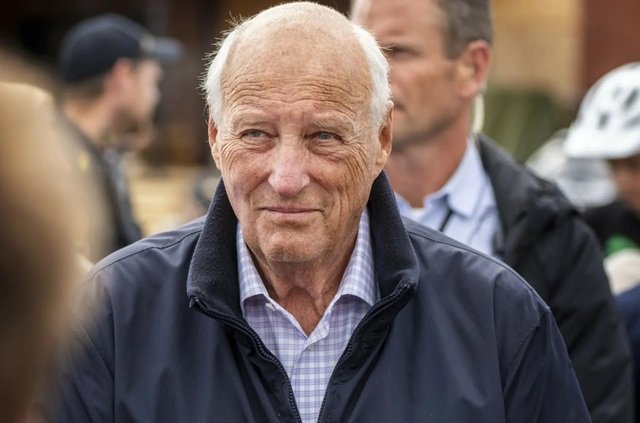
King Harald V of Norway died today, 28 August 2026, aged 89, ending one of the most unusual royal lives of the modern era. He spent more than three decades on the Norwegian throne, but his story began far from it — as a child forced into exile by Nazi Germany. He grew up partly in wartime America, stood behind President Franklin D. Roosevelt at his fourth inauguration, returned to Norway to attend an ordinary state school, became a military officer, studied at Oxford, competed at three Olympic Games, married a commoner after a constitutional struggle and eventually became one of Europe’s most quietly influential constitutional monarchs. Harald modernised the image of the Norwegian crown without ever pretending that he was a modern politician. He understood that in an egalitarian country, a king who behaved too much like a king could eventually become irrelevant.
The most revealing image of Harald is therefore not the elderly monarch in Oslo but the young Norwegian prince in wartime Washington. After Germany invaded Norway in 1940, Harald’s mother, Crown Princess Märtha, fled with her children and eventually brought them to the United States, where they received protection from the Roosevelt administration. Harald was a child refugee living under the protection of the American presidency. One of his most remarkable memories was standing behind Roosevelt during the President’s fourth inauguration in January 1945. The future king of Norway thus experienced national identity first as something that could be lost and defended from abroad. He returned to Norway in 1945, but America remained an important part of his personal history. The White House boy would eventually become the head of state of the country from which he had once been driven by war.
The Norwegian monarchy then made a deliberate decision about what kind of king Harald would become. He attended Smestad School, becoming the first Norwegian royal to attend a public state school. In post-war Norway, where social equality was becoming a defining national principle, the future king could not remain sealed inside a palace. Harald was later trained at the Norwegian Military Academy and studied history, economics and social science at Balliol College, Oxford. But sport may have revealed more about him than either military training or academic credentials. He was a serious competitive sailor, representing Norway at the Olympic Games in Tokyo, Mexico City and Munich. He later won world and European sailing titles and continued competing until he was 85. Harald genuinely liked competition and continued to compete long after most men his age had retired from the sport.
Then came Sonja Haraldsen. The woman Harald wanted to marry was a commoner, and the relationship became a problem for the succession. He and Sonja eventually married in 1968. What had once looked like a threat to the institution became one of the reasons the institution survived. Harald was forcing the monarchy to confront the society it claimed to represent. If Norway was an egalitarian country, the future queen could hardly be required to possess an aristocratic pedigree. His marriage was therefore not merely a love story. It was a test of whether the monarchy could adapt without destroying itself.
When Harald became king in 1991, he lacked the theatrical personality of his father, Olav V. Harald was quieter, more reserved and often self-deprecating. He did not attempt to dominate Norwegian political life. After the terrorist attacks of 22 July 2011, he defended the principles of openness and democracy rather than allowing fear to dictate the national response. “Freedom is stronger than fear,” he declared. Five years later, he delivered perhaps the most consequential speech of his reign. At a garden party in 2016, amid arguments over immigration, refugees, religion and identity, Harald declared that Norway belonged to its people, including those who were gay, those of different religions and those whose families had come from abroad. He then made a point that carried particular weight coming from a hereditary monarch: his own grandparents had come from Denmark and Britain. The king was effectively arguing that belonging to a nation could not be reduced to bloodline.
That was Harald’s particular genius. He made monarchy look less like inherited privilege and more like public service. He did not abolish the distance between crown and citizen; he reduced it. He sailed, hunted, supported environmental causes and spoke about ordinary human concerns without constantly reminding people that he was their king. He became president of the Norwegian branch of WWF and maintained a longstanding interest in conservation.

Yet his final years exposed the vulnerability of the institution he had spent decades making respectable. Controversies involving members of his family — including the marriage of Princess Märtha Louise to Durek Verrett, commercial disputes surrounding the couple, the criminal case involving Marius Borg Høiby and scrutiny surrounding Crown Princess Mette-Marit’s past contact with Jeffrey Epstein — damaged the Norwegian monarchy’s image. None of these controversies should simply be transferred onto Harald personally. But they raise a more uncomfortable question: how much of the monarchy’s credibility rested on Harald himself? His personal reputation remained remarkably resilient even as problems accumulated around the royal household.
Harald’s refusal to abdicate despite repeated health problems was perhaps the final expression of his character. He believed that kingship was a duty assumed for life, not a position from which one could simply retire. It was an old-fashioned conviction in a thoroughly modern monarchy. He could accept public schools, marry a commoner, embrace immigrants and defend LGBT Norwegians while retaining an almost archaic sense of personal obligation to the crown.
The central irony of Harald’s life is that he may have preserved the Norwegian monarchy by making himself less royal. He was born a prince but spent his formative years as a refugee. He returned home and went to an ordinary school. He competed rather than merely presided. He married outside the aristocracy. He spoke about Norway as a community rather than a possession. And when the country was frightened or divided, he appealed to its democratic instincts rather than its royal traditions.